What the Green, Black and Red Staining on Windsor Roofs Means
Stand across the road from almost any older house in Windsor and look up at the roof. Chances are you will see more than one colour: patches of green, streaks of black running down from the ridge, and sometimes a rusty red-orange tint clinging to the tiles nearest a chimney or valley. It is one of the questions any roof cleaning Windsor company hears again and again: what do these different colours actually mean, and should you be worried? The short answer is that each colour points to a different organism or process, and knowing which is which helps decide how urgently a roof needs attention.
The quick answer: green staining is usually algae or moss thriving in damp, shaded conditions, black streaks are typically airborne algae that feeds on the limestone filler in some roof tiles, and red or orange staining is often lichen or, less commonly, rust from an old metal fitting, and all three are worth acting on before they spread further or trap moisture against the tile.
1. Green Staining: Algae and Early Moss
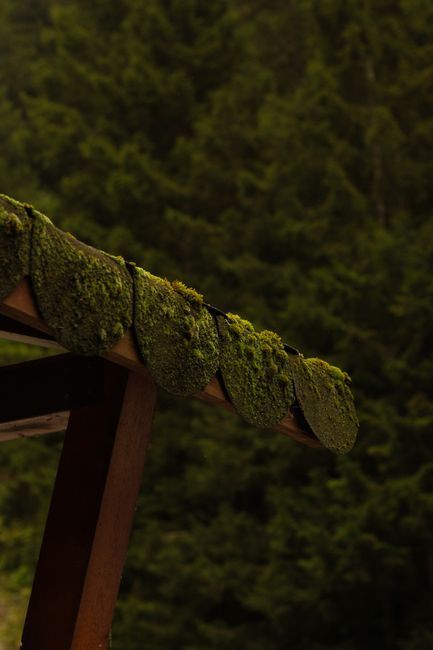
Green is the colour homeowners notice first, and it is usually the earliest visible sign that a roof has a damp problem. A thin green film is typically algae, a simple organism that spreads across the tile surface wherever conditions stay consistently moist, such as shaded slopes, valleys, and areas beneath overhanging trees. Left alone, that algae film often becomes the base layer that moss then colonises, turning a flat green tinge into raised, cushiony moss growth over a season or two.
Green staining tends to be worst on north-facing slopes and on roofs close to the River Thames, where higher background humidity keeps tiles damp for longer after rain. We explain this riverside effect in detail in our article on Thames-side damp and moss growth in Windsor, which is worth reading alongside this one if green staining is your main concern.
2. Black Streaks: Airborne Algae, Not Just Dirt
Black streaking running down from a ridge or chimney is often mistaken for simple grime or soot, but in most cases it is a specific type of algae that feeds on the calcium carbonate found in some concrete and older clay roof tiles. The algae spores are carried by wind and rain, settling on a roof and then washing downward in a characteristic streaked pattern each time it rains, which is why the staining so often looks like it is dripping from a fixed point such as a chimney stack or ridge tile.
This type of staining is common on concrete tiles in particular, though it can appear on clay too. Because it feeds on a mineral component of the tile itself rather than just sitting on the surface, black streaking can be more stubborn to remove than a simple green film, and scrubbing too hard risks damaging the tile surface rather than the algae. Our comparison of clay versus concrete roof tiles in Windsor looks at how cleaning approaches should differ between the two materials, which matters a great deal once black streaking has set in.
3. Red and Orange Staining: Usually Lichen
Reddish or orange patches on a roof are usually lichen rather than algae or moss. Lichen is a combination organism, part fungus and part algae, and it tends to form crusty, flat patches that bond tightly to the tile surface rather than sitting loosely on top of it the way moss does. It often appears on older, more weathered clay tiles, and on roofs that receive a reasonable amount of sun but also enough dampness to support growth, which makes it common on east and west-facing slopes as well as shaded ones.
Occasionally, a rusty stain near a chimney, flashing, or an old metal fixing is not lichen at all but genuine rust bleeding from a corroding fitting. This is worth distinguishing from lichen because rust staining can point to a metal component that needs replacing rather than a growth that simply needs cleaning off, so a close look, or a professional inspection, is useful when the cause is not obvious.
4. Why Colour Matters When Deciding How to Clean
Different growths respond differently to cleaning. A light green algae film often lifts relatively easily with a gentle, low-pressure soft wash and the correct biocide treatment. Thick moss cushions need more careful, gradual removal so tiles are not disturbed or cracked. Black algae streaking, because it is bonded into the tile material itself, generally needs a longer dwell time for treatment to work rather than aggressive scrubbing. Lichen, being tightly crusted onto the tile, is often the slowest of the four to remove and should never be scraped off forcefully, since that risks taking a layer of the tile surface with it.
This is one of the main reasons pressure washing alone is a poor approach to roof cleaning. It might shift loose moss quickly, but it does little for bonded algae or lichen, and on older or softer tiles it can force water beneath the tile and strip away protective surface texture. Our guide to soft washing as a safer cleaning method covers why a gentler, targeted approach tends to get better and longer-lasting results across all three colours of staining.
5. Spotting the Signs Before They Spread
Because each type of staining starts small, it helps to know what to look for before a roof reaches the point of an obvious, whole-slope colour change:
- A faint green tinge on shaded tiles that never seems to fully dry out, especially after a wet week.
- Thin black lines running vertically down from a ridge, chimney or valley, most visible after rain.
- Flat, crusty orange or rust-coloured patches that feel rough rather than soft to the touch.
- Colour differences between slopes of the same roof, which usually point to shading or drainage rather than the tiles themselves being different.
- Staining concentrated around chimneys, valleys and gutters , where water naturally collects or drains more slowly.
6. Windsor's Period Housing Makes Early Spotting Easier
Many of Windsor's older streets, from the Georgian terraces near the town centre to the Victorian housing that spread into Clewer and Dedworth as the town grew in the nineteenth century, have roofs with a long, visible history of small repairs, replaced tiles and weathering. This actually makes it easier to compare a newer, unaffected tile against an older, stained one on the same roof and judge how quickly staining is progressing. In conservation areas particularly, keeping on top of staining before it becomes severe also helps preserve the uniform, traditional appearance that the borough's conservation guidance aims to protect. Our article on caring for roofs in Windsor's conservation areas covers this in more detail.
7. When Staining Signals a Bigger Problem
In most cases, green, black or red staining is a maintenance issue rather than a structural one, but there are situations where it is worth a closer look. Heavy moss or lichen sitting over a cracked or slipped tile can hide the damage underneath until the tile is cleaned. Persistent black streaking that keeps returning quickly after cleaning can point to a nearby tree or a drainage issue keeping that section of roof consistently damp. And staining that coincides with damp patches appearing on a ceiling below is a sign that water may already be getting past the tiles, which calls for a roofer's inspection rather than cleaning alone.
8. A Practical Approach to Roof Cleaning Windsor Homeowners Can Rely On
The most effective approach for most Windsor homes is a periodic inspection, ideally once a year, looking specifically at colour and texture changes on each roof slope rather than waiting for an obviously mossy or streaked roof to become visible from the street. Catching a faint green film or the first thin black streaks early means a lighter, quicker clean, rather than the more involved treatment a roof needs once staining has spread across a full slope or bonded deeply into the tile surface over several seasons.
Frequently Asked Questions
Is green staining on my roof dangerous?
It is not dangerous in itself, but it is a sign that part of your roof is staying damp for longer than it should. Left untreated, green algae often develops into thicker moss, which can hold moisture against tiles and eventually lead to slipped tiles or gutter blockages.
Why does the staining always run in vertical streaks?
Black streaking in particular follows the path rainwater takes as it runs down the roof from a fixed point such as a ridge tile or chimney, carrying algae spores with it and depositing them in a streaked pattern each time it rains.
Can I remove roof staining with a garden hose or pressure washer myself?
A hose will do very little against bonded algae or lichen, and a domestic pressure washer used incorrectly can crack tiles, strip their protective surface, or force water underneath them, so this is not something we would recommend attempting yourself.
Does staining mean my tiles need replacing?
Usually not. Staining is a surface growth issue in the vast majority of cases and can be treated without replacing tiles, though any tile that turns out to be cracked or damaged once cleaned should be assessed and replaced separately.
How much does it cost to remove roof staining?
Cost depends on the roof's size, pitch and access, how established the staining is, and which type is present, since black algae and lichen generally take longer to treat than a light green film. A rough, general quote is not reliable without seeing the roof, which is why we always assess in person before pricing.
How often should I check for staining?
Once a year is a sensible minimum for most Windsor homes, with an extra check after a particularly wet autumn or winter, since that is when green and black staining tends to progress fastest.
Not sure what the colour on your roof actually is?
Ben's Roof Cleaning has over 15 years of experience identifying and safely removing moss, algae and lichen from roofs across Windsor and the surrounding villages. Get in touch or call 0788 912 7153
for a free, no-obligation quote.
Every Colour on a Windsor Roof Is Telling You Something Worth Listening To
Green, black and red staining are not simply cosmetic quirks of an older roof, they are visible evidence of exactly where a roof is staying damp, which organisms have taken hold, and how urgently that section needs attention. Learning to read those colours gives Windsor homeowners a genuine head start, letting them deal with a light green film or a few thin black streaks long before the problem spreads into thick moss or deeply bonded lichen across the whole roof.